







 GET QUOTE
Home / Editorial / Modern Kitchen Features Worth Investing In

05 Aug 2026
Modern Kitchen Features Worth Investing In
The modern kitchen represents a dynamic architectural environment where culinary functionality, structural craftsmanship, and responsive digital technology converge to create an intuitive sanctuary for cooking, hosting, and household living. For homeowners considering a major renovation, allocating capital across countless competing trends can feel overwhelming. Balancing the desire for premium materials with realistic budget constraints requires understanding which structural components genuinely improve daily workflows and protect property resale value. In this technical evaluation, we examine the essential modern kitchen features worth investing in, analyzing material durability, spatial return on investment (ROI), joinery tolerances, and ergonomic planning principles.
Key Takeaway: The Highest-Yield Modern Kitchen Upgrades
The modern kitchen features that deliver the highest measurable returns combine structural joinery longevity with operational energy efficiency: Custom 18mm–22mm MR MDF Cabinetry: Capturing full vertical ceiling height and outperforming flat-pack carcasses by 15–20 years; Non-Porous Engineered Quartz Worktops: Delivering zero-stain resistance and eliminating annual sealing costs; Full-Extension Tandem Drawers: Replacing static shelves with 50kg-rated soft-close runners; and Smart Induction Cooktops: Achieving over 85% energy transfer efficiency compared to just 40% for conventional gas burners.
Introduction to Modern Kitchen Features
A modern kitchen has moved far beyond its historic role as an isolated utility room dedicated exclusively to meal preparation. In contemporary residential architecture, the kitchen serves as the social and operational anchor of the home. Open-plan layouts mean that kitchen design directly influences adjacent dining and living zones, establishing the visual, acoustic, and environmental tone for the entire household.
Investing in high-specification modern features is therefore not simply a decorative cosmetic exercise; it is an architectural upgrade that improves daily domestic efficiency while protecting long-term equity. High-performance kitchens balance tactile, durable materials with energy-conscious systems, ensuring that surfaces resist wear and tear while mechanics operate quietly and smoothly for decades.
Defining the Modern Kitchen Environment
A true modern kitchen is defined by intentional minimalism, integrated appliances, and precise tolerances:
- Seamless Geometric Lines: Clean vertical and horizontal elevations achieved through handleless J-pull profiles or true handleless recessed aluminum rail (gola) systems.
- Continuous Architectural Scribing: Cabinetry scribed cleanly to uneven plaster walls and ceiling cornices with variances under 1.0mm, eliminating unsightly plastic filler strips.
- High-Performance Substrates: Replacing moisture-sensitive 15mm chipboard with dense 18mm or 22mm Moisture-Resistant Medium-Density Fiberboard (MR MDF) and solid birch ply drawer boxes.
- Concealed Environmental Technology: Low-decibel downdraft ventilation, quiet-operating dishwashers (<42dB), and automated circadian task lighting integrated directly into cabinet undersides.
To discover how modern cabinetry configurations can be tailored to individual properties, explore our complete portfolio of bespoke kitchen ideas and read our planning guide for fitted kitchens in Harrow.
Popular Modern Kitchen Features: Engineering and Performance Analysis
Selecting the right modern features requires assessing how materials and mechanisms perform under the daily stress of heat, moisture, and mechanical use.
| Modern Kitchen Feature | Standard Specification | Architectural Performance Standard | Average Capital ROI |
|---|---|---|---|
| Cabinetry Carcasses | 15mm standard particleboard / chipboard | 18mm–22mm high-density MR MDF or birch ply | 70% – 85% equity retention |
| Countertops & Worktops | 30mm post-formed laminate / unsealed granite | 20mm–30mm engineered quartz or sintered porcelain | 75% – 90% equity retention |
| Drawer Runner Systems | Single-extension nylon roller runners (15kg) | Full-extension concealed undermount slides (50kg–70kg) | 80% – 95% equity retention |
| Cooking Appliances | Standard gas open burners (40% efficiency) | Flex-induction hobs with pan sensors (85%+ efficiency) | 65% – 80% equity retention |
| Task Illumination | Individual halogen or fluorescent downlights | Continuous 2700K–3000K warm LED channels (CRI >90) | 85% – 100% operational return |
1. Smart Appliances and Induction Technology
Smart appliances have evolved beyond simple smartphone notifications into responsive cooking tools. Modern induction hobs use electromagnetic coils to excite iron molecules directly within cookware, delivering precise heat while keeping the surrounding glass surface cool to the touch. This provides immediate safety benefits and allows for easy, wipe-clean maintenance without baked-on spills.
Smart steam combination ovens automatically inject moisture at precise cooking phases to preserve food nutrients and prevent drying. Meanwhile, multi-point core temperature probes monitor internal food temperatures and shut off heating elements the moment optimal internal temperatures are reached, ensuring consistent, professional-grade results.
2. Engineered Quartz and Sintered Stone Countertops
Worktops endure continuous physical contact, knife impacts, and acidic spills from lemon juice, wine, and oils. Traditional natural marbles, while visually striking, are porous and vulnerable to permanent acid etching and staining unless sealed regularly.
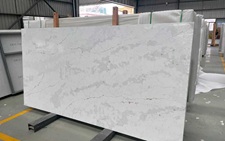
Engineered quartz solves these maintenance concerns. Manufactured from 90% to 93% crushed natural quartz aggregate bound with durable polymer resins under intense vacuum and pressure, quartz is non-porous and never requires sealing. For high-heat areas adjacent to hobs, sintered stone and porcelain slabs provide complete thermal resistance, allowing hot pans to be placed directly on the worktop without scorching.
3. Precision Custom Cabinetry and Pull-Out Mechanism Engineering
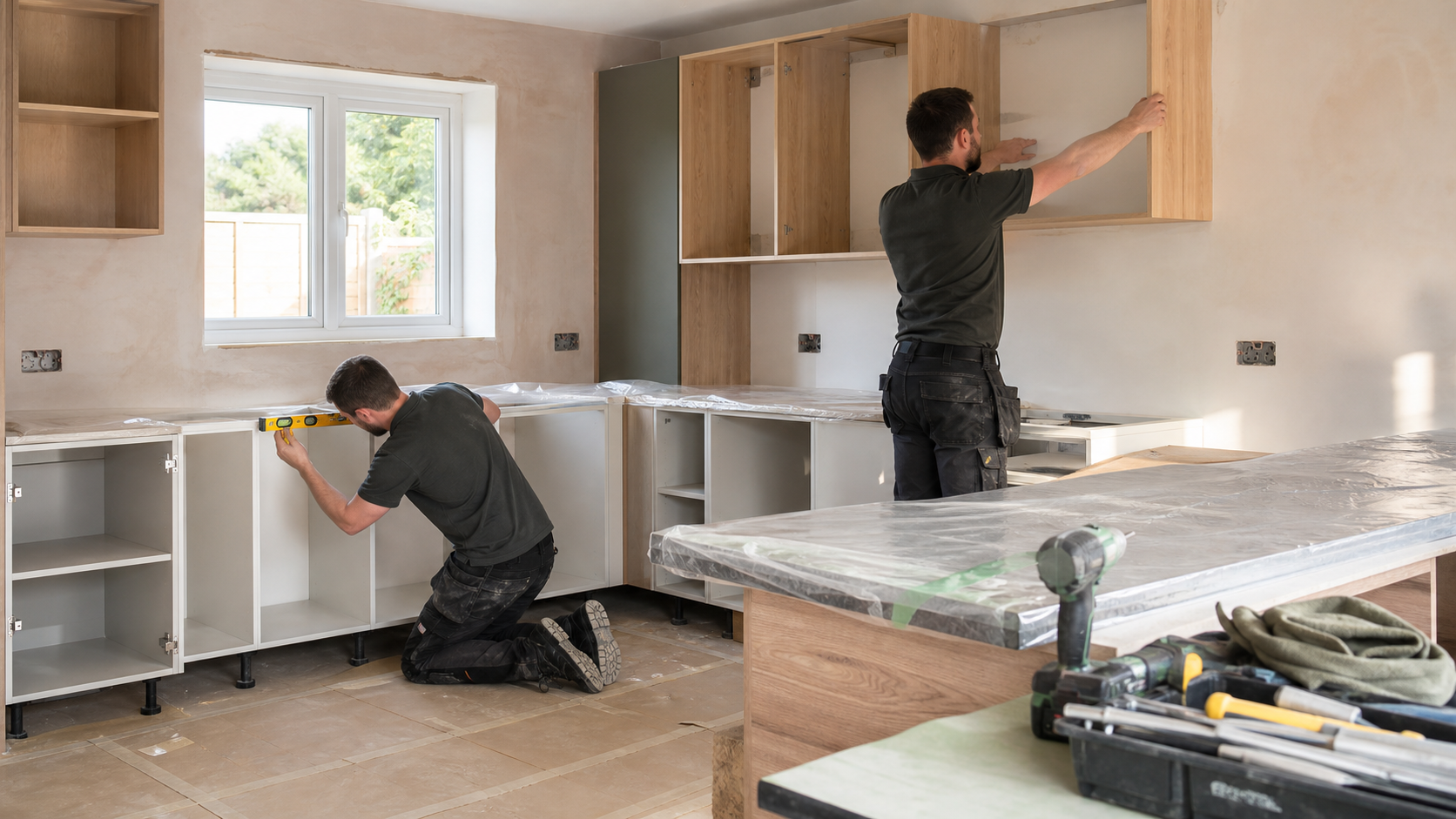
A kitchen's operational lifespan depends directly on the strength of its cabinetry carcasses. Retail flat packs assembled with wooden dowels and lightweight particleboard often show structural sagging within 5 to 7 years. Bespoke cabinetry built with 18mm or 22mm MR MDF and commercial-grade fixings easily lasts past 25 to 30 years without joint failure.
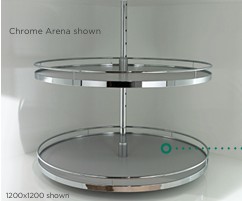
Replacing static base cabinet shelves with full-extension tandem drawers brings all stored items out into the room, ending the need to crouch and rummage in dark cupboards. For awkward corner voids, articulating twin-shelf pull-out trays (such as LeMans systems) glide outward smoothly, reclaiming up to 40% of previously unreachable corner storage.
To understand how custom cabinet engineering enhances living spaces throughout the home, explore our specialized guides on modern kitchens in Harrow and our custom designs for bespoke wardrobes.
Choosing the Right Kitchen Features for Your Home
Selecting the best modern features requires balancing personal cooking habits, household size, and architectural room layouts.
Lifestyle Alignment and Workflow Planning
Before allocating capital to specific appliances or finishes, audit how your household actually uses the kitchen day to day:
- The Culinary Enthusiast: Prioritize high-performance extraction systems (minimum 650m³/hr airflow rating), a 900mm wide induction hob with bridging flex zones, and twin ovens (one dedicated steam convection, one pyrolytic fan oven).
- The Busy Family Household: Invest in deep tandem pan drawers fitted with adjustable internal pegs, anti-fingerprint super-matte cabinet finishes, and a secondary under-counter prep sink to keep food prep moving smoothly.
- The Frequent Entertainer: Design an open central island with a 300mm overhang for bar stool seating, an integrated dual-zone wine preservation cooler, and a quiet integrated dishwasher operating below 40dB to keep conversations undisturbed.
Circulation Paths and Clearance Tolerances
Even high-end modern features will feel frustrating if installed in a cramped, poorly planned layout. Maintain strict architectural clearances:
- Maintain a minimum 1050mm clear walking corridor between opposing cabinet runs, expanding to 1200mm around islands to allow two people to pass comfortably.
- Ensure at least 900mm of clear landing space directly adjacent to ovens and refrigeration units for safe handling of hot trays.
- Keep a minimum 400mm clearance on either side of the hob to ensure pan handles do not project into walking paths.
"A truly modern kitchen is not defined by novelty gadgets, but by the seamless alignment of spatial flow, durable materials, and quiet, reliable mechanics."
— Architectural Kitchen Design & Ergonomics Consensus

Benefits of Investing in Modern Kitchen Features
Upgrading to high-specification modern kitchen features delivers compounding practical, financial, and environmental advantages:
1. Improved Daily Efficiency and Ergonomics
Modern kitchens are engineered around how the human body naturally moves. Grouping preparation surfaces, wash stations, and cooking hobs within a well-balanced working triangle reduces unnecessary steps during meal preparation. High-level ovens mounted at eye level prevent repetitive bending, protecting back health over decades of cooking.
2. Property Equity and Sales Velocity
In residential real estate appraisals, the kitchen is consistently viewed as the single most critical interior space. Appraisers and prospective buyers evaluate kitchen quality as a primary indicator of how well the entire property has been maintained.
According to residential valuation data published by the Royal Institution of Chartered Surveyors (RICS), high-specification architectural kitchens deliver an estimated 4% to 8% capital valuation uplift upon property resale. In competitive housing markets, homes featuring contemporary handleless cabinetry, premium stone worktops, and integrated induction appliances sell considerably faster than properties with dated modular units.
3. Operational Energy Efficiency and Cost Reductions
Modern kitchen upgrades directly reduce monthly household utility costs:
- Induction Energy Transfer: Converts over 85% of electrical energy into cooking heat, compared to traditional gas burners which lose roughly 60% of their heat into the surrounding room.
- Continuous LED Strips: Low-voltage LED profiles use up to 80% less energy than older halogen spotlights and boast lifespans exceeding 50,000 operational hours.
- Inverter-Driven Refrigeration: Modern variable-speed compressors adapt cooling output dynamically, cutting electricity usage while keeping temperature variations within 0.5°C to preserve fresh produce longer.
To learn more about cabinetry options and interior design ideas, browse our collection of fitted wardrobes design principles and visit our overview of Xeeni architectural joinery standards.
Staying Within Budget: Strategic Allocation and Value Engineering
A kitchen renovation requires disciplined budget planning to ensure that funds are directed where they provide the greatest functional return, rather than being absorbed by cosmetic additions.
| Renovation Category | Recommended Allocation | High-Value Strategic Focus | Value-Engineering Alternative |
|---|---|---|---|
| Cabinetry & Joinery | 40% – 50% | 18mm MR MDF carcasses with soft-close tandem runners | Standard exterior doors paired with premium internal running gear |
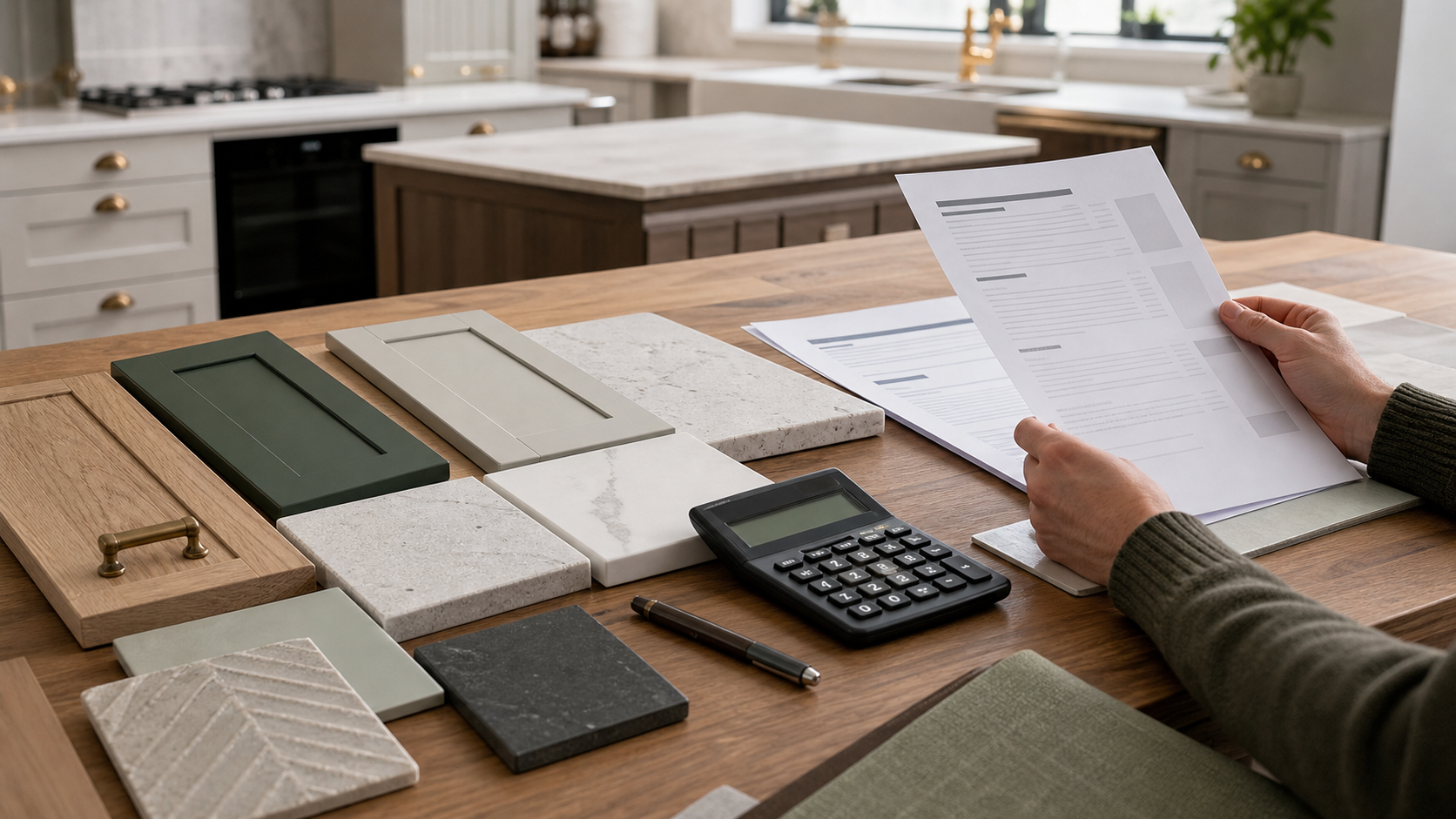
| Worktops & Splashbacks | 15% – 20% | 20mm polished or honed engineered quartz | High-pressure compact laminate on perimeter runs with quartz island |
| Cooking & Cooling Appliances | 15% – 20% | Integrated flex-induction hob and pyrolytic steam oven | Mid-tier appliances from tier-one manufacturers sharing core motors |
| Plumbing, Sinks & Taps | 5% – 8% | Undermount composite granite or 16-gauge stainless steel | Single-lever pull-out spray tap over instant boiling water tanks |
| Contingency Reserve | 10% | Held strictly for subfloor levelling and electrical upgrades | Non-negotiable buffer; absorbs unexpected structural adjustments |
The 50/30/20 Budgeting Rule for Kitchen Renovations
To keep your renovation financially sound, adopt a disciplined 50/30/20 allocation framework:
- 50% to Primary Functional Infrastructure: Carcasses, heavy-duty drawer runners, primary worktops, and foundational installation by skilled tradespeople. These elements form the permanent bones of the room and cannot be easily swapped out later.
- 30% to Appliances and Fixtures: Induction hobs, extraction units, refrigeration, sinks, and taps. Focus on reliability, quiet decibel ratings, and energy efficiency.
- 20% to Lighting, Decorative Finishes, and Contingencies: Task lighting channels, splashback tiling, wall decor, and a mandatory 10% contingency reserve to cover unexpected plumbing or electrical updates uncovered during site strip-out.
Return on Investment (ROI) of Modern Kitchen Features
Evaluating kitchen features through the lens of return on investment helps clarify the difference between genuine capital upgrades and depreciating cosmetic trends.
High-ROI Features vs Low-ROI Additions
Industry data and appraisal reports confirm that functional, permanent kitchen improvements yield the most reliable financial returns:
- High-ROI Investments (75%–90% Cost Recovery): Full-extension soft-close tandem drawers, integrated pull-out pantries, neutral engineered quartz worktops, and energy-efficient induction hobs. These features provide immediate utility and appeal universally to prospective future buyers.
- Moderate-ROI Investments (50%–65% Cost Recovery): Concealed appliance garages, under-cabinet warm LED lighting channels, and integrated wine coolers.
- Low-ROI Investments (<40% Cost Recovery): Overly personalized decorative backsplashes, specialty single-purpose appliances (such as built-in teppanyaki grills or built-in coffee machines requiring complex plumbing maintenance), and delicate high-gloss foil door wraps prone to edge chipping.
"Prospective property buyers calculate the cost of replacing worn cabinets the moment they walk into a home. Quality carcasses and timeless stone surfaces remove that friction entirely, protecting property valuation."
— Residential Joinery & Surveying Valuation Review
To see real-world project transformations and read client experiences, visit our completed kitchen joinery reviews hub or explore ready-to-order options via Xeeni Buy Online.
Master Technical Checklist for Modern Kitchen Planning
Use this comprehensive planning checklist to evaluate, budget, and execute your modern kitchen renovation:
Phase I: Spatial Diagnostics & Layout Audit
- Measure room perimeter runs, ceiling heights, and door-swing clearances down to the millimeter.
- Map positions of primary plumbing supply lines, waste pipes, gas connections, and electrical consumer units.
- Confirm minimum 1050mm clear walking corridors between opposing cabinetry runs and islands.
- Establish an ergonomic working triangle linking refrigeration, prep sink, and cooking hob.
Phase II: Joinery Specifications & Material Selection
- Specify 18mm or 22mm Moisture-Resistant MDF (MR MDF) for all structural carcasses rather than standard chipboard.
- Incorporate full-extension soft-close undermount drawer slides rated for 50kg–70kg dynamic loads.
- Install articulating twin-tier pull-out trays (e.g., LeMans mechanisms) in all blind corner cabinets.
- Select non-porous 20mm–30mm engineered quartz or sintered stone worktops to prevent staining.
Phase III: Electrical, Lighting & Appliances
- Install continuous warm 2700K–3000K LED task lighting channels beneath wall cabinets to eliminate counter shadows.
- Choose an energy-efficient flex-induction hob with an extraction system rated for at least 650m³/hr airflow.
- Ensure all integrated appliances operate below 42dB to maintain acoustic comfort in open-plan spaces.
- Hold a dedicated 10% contingency reserve strictly for unexpected subfloor and electrical upgrades.
Design Your High-Performance Modern Kitchen
Ready to upgrade your home with high-yield modern kitchen features? Schedule a free 3D design consultation with our senior CAD specialists to receive an itemized proposal and tailored layout plan.
Book Your Design ConsultationFrequently Asked Questions
What is the average ROI of modern kitchen features?
According to residential property valuation data from the Royal Institution of Chartered Surveyors (RICS), high-quality modern kitchen renovations recoup between 60% and 85% of their capital outlay immediately upon property appraisal, while minor, highly focused structural upgrades can recoup up to 100% or more by significantly accelerating sales velocity.
Which kitchen features add the most financial value to a home?
Custom-built 18mm MR MDF cabinetry, engineered quartz or solid porcelain worktops, integrated full-extension tandem drawer systems, and high-efficiency induction cooking appliances contribute the highest tangible equity uplift during professional real estate valuations.
Are smart appliances worth the investment compared to conventional appliances?
Yes, provided the technology enhances daily functionality. Smart induction hobs with pan-detection sensors, multi-point core temperature probe ovens, and app-monitored refrigeration reduce energy waste by up to 20% and provide active maintenance diagnostics that extend appliance lifespan.
Why are quartz countertops preferred over natural marble or laminate?
Engineered quartz contains approximately 90% to 93% natural quartz aggregate bound with polymer resins, yielding a non-porous, antibacterial surface that completely resists acid etching, staining, and impact cracking without requiring annual sealing.
How does energy-efficient LED task lighting improve kitchen functionality?
Concealed 2700K–3000K warm LED profile strips mounted beneath wall units cast continuous shadow-free illumination directly onto food preparation counters, drawing up to 80% less electrical power than halogen spotlights while eliminating visual eye strain.
How should I budget for a modern kitchen renovation?
Allocate 50% of your total budget to core structural joinery and installation, 25% to appliances and extraction, 15% to durable worktops and splashbacks, and hold a dedicated 10% contingency reserve for unforeseen plumbing, electrical, or structural subfloor adjustments.